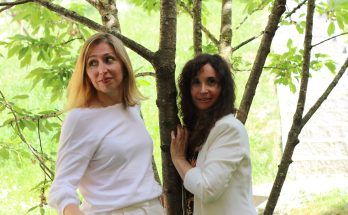
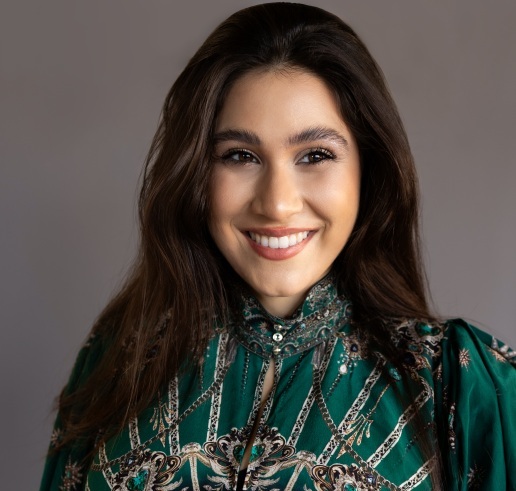
This time PianoMe caught up with Ashkhen to talk about what it means to be an international music student, Germany and also about her artistic identity. She also told us why she likes PianoMe’s idea.
PianoMe (PM): Dear Ashkhen, thank you very much for your time! It is a great pleasure for us that you are ready for an interview with PianoMe!
Ashkhen Varzhapetyan (AV): The pleasure is mine. I am very happy to share my voice with you, dear PianoMe-Team.
PM: That’s great, thank you! First of all, we would like to briefly introduce you to our readers, even though many of them probably already know who you are. As a promising young soprano with an impressive international profile, you have been shaping your artistic path with remarkable dedication from an early age. You began your musical education at the age of six and have since developed into a versatile and accomplished performer. From 2021 to 2023, you were a member of the Children’s Choir of the Stuttgart State Opera and at the same time a junior student at the University of Music and Performing Arts Stuttgart, where you are now pursuing your Bachelor’s degree in Vocal Performance. You have already gained significant stage experience, including roles such as the First Witch in Purcell’s Dido and Aeneas, Zerlina in Mozart’s Don Giovanni at the renowned Ljubljana Festival, and Venus in Offenbach’s Orpheus in the Underworld. Your artistic path has been accompanied by numerous international competition prizes, and since 2025 you have been a scholarship holder of YEHUDI MENUHIN Live Music Now.
AV: (laughing) Thank you so much—that’s a very generous introduction. Hearing it all put together like that feels a bit surreal! But yes, music has really been a part of my life for as long as I can remember. I feel incredibly grateful for the opportunities I’ve had so far, and also for the support from my teachers, family, and mentors along the way. Right now, I’m really focused on continuing to develop my voice and artistic identity during my studies, while also gaining as much stage experience as possible. It’s an exciting journey, and I’m very happy to share it with audiences.
PM: You began your musical journey at a very young age. What first inspired you to pursue music, and when did you realize that singing could become more than just a passion?
AV: I come from a very musical family, and ever since I was a child, they saw that music, especially singing, is an unbreakable part of me. I started studying at the age of six in Armenia, which I am very grateful for. As long as I can remember, I could feel and understand music— it spoke to me without any spoken language. I have always felt that I belong there. To be honest, it still feels like a fairytale to me, which I want to explore, learn from, grow in, and share the magic that is in my heart through my voice with people. A core moment when I fell in love with opera and decided in my heart to become a singer was when my stepfather took me to see Mozart’s Cosi fan tutte at the Felsenreitschule in Salzburg. At first, when my mother explained the plot to me, I was confused and even a bit disappointed, because it felt silly and not serious as I was expecting. But when I experienced the music, everything changed. It was so beautiful, so perfectly sung and acted. Even though I could not understand every word, I felt everything. That was the moment I knew that I belonged there.
PM: You were a member of the Children’s Choir of the Stuttgart State Opera while also studying as a junior student. How did this combination of academic training and stage experience influence your development?
AV: Yes, it was fantastic. I was working at the opera as a child and studying at the university right next to it. It felt great. From a young age, I saw how opera works— how to work with conductors and singers, how everything is prepared, including costumes and makeup. At the Hochschule, I was taking my first steps in learning technique more deeply, as well as music, history, and all the right tools to help me achieve my dreams. Seeing opera backstage opened my eyes and gave me a very good understanding, which still helps me on my journey.
Navigating Germany: Challenges for International Music Students
PM: You moved to Germany at a relatively young age to pursue your musical education. What were the biggest challenges you faced when you first arrived?
AV: I even went to school in Germany. In the beginning, of course, it was not easy, but I always loved and respected German classical music and composers- and also football (laughs). That helped me a lot. Also, my stepfather is German, and with his care and support, it was not as challenging as it could have been.
PM: Beyond the academic aspect, what cultural differences did you notice, and how did they influence your artistic development?
AV: I noticed that in Germany there is a lot of structure, discipline, and organization, especially in music and education. Everything is very precise. Coming from a more emotional and expressive background, this was different for me. Over time, I learned to combine both — the discipline and the emotional freedom- and this has really influenced my artistic development.
PM: What were the biggest challenges you faced when transitioning from a young talent to a professional vocal student?
AV: I am still in the process of learning and developing myself and trying to figure everything out.
PM: Interesting! Based on your own experience: in what ways can German conservatories and universities improve the experience of their international music students? And what difficulties do international music students face when trying to integrate into local ensembles or performance opportunities?
AV: German universities give very good opportunities to learn and to take part in different projects. You can also work with very good and famous professionals in masterclasses. I also love the discipline here and the respect people have for each other. You just have to try and apply, assuming there is an opportunity, and it is much easier if you are a student at a Hochschule.
Between Tradition and Personal Expression – Ashkhen Varzhapetyan’s Musical Identity
PM: Has being an international student also brought advantages to your artistic identity or career opportunities?
AV: Oh, for sure. I have traveled a lot with my family and also alone to different countries and cultures. Also, studying with international students opened my perspective more. I learned about people, their thoughts, their cultures, and their ways of acting. For example, this helps me a lot with acting, because I have seen and experienced different lives.
PM: To what extent does your cultural background influence your musical interpretation and artistic expression?
AV: I consider myself Armenian, and Armenia gives me the strength to be myself and to represent my country through my voice as well as I can.
PM: Very interesting! As a young soprano, how do you balance technical expectations with your own individuality?
AV: My body is my instrument. Until today, I have been learning how to take care of it and what is good or bad for it before I sing. Technique is very important, because it gives you confidence on stage and allows you to be as free as you wish through acting and singing.
PM: And how important is experimentation in finding your own voice and artistic profile?
AV: Experimenting helps me to understand my body, my voice, and myself. Without finding what is good or bad for me, it is hard to understand myself and my voice.
PM: You have received several prizes at international competitions. How have these experiences contributed to your growth as an artist?
AV: I like competing. It helps to build a strong mindset, to be confident, and to believe in yourself, no matter what the outcome is.
PM: By the way, what do you look for when preparing a new role — vocally, dramatically, and emotionally?
AV: First of all, I look at the score to see if it suits my voice and the character. Then I learn the story and try to feel it in my body, creating the character with my own vision and truly living it on stage.
Final Thoughts and Future Outlook
PM: Thank you, Ashkhen! What does networking mean in the music industry?
AV: It is necessary and very important.
PM: That sounds interesting! I’m really sorry, but I have to ask (laughing). What do you think about www.piano.me and would you recommend PianoMe to musicians?
AV: Of course, I really enjoyed your questions and your interest. It was a great pleasure.
PM: Thank you, Ashkhen! Finally, what are your aims for the future? Would you like to share any announcement with our readers?
AV: (laughing) Yes, I am preparing the role of Najade in Ariadne auf Naxos by Richard Strauss, which I will sing in Stuttgart under the baton of Manfred Honeck. I am really excited about this.
PM: Dear Ashkhen, we thank you for the interview and wish you all the best! See you again soon!
AV: Thank you so much, all the best.
Copyright Foto: @Katie Loff