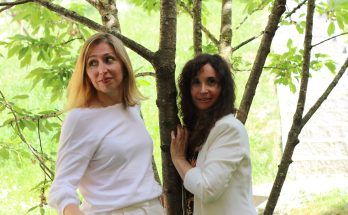

This time, PianoMe caught up with Katie to talk about her journey from opera singer to photographer and back again. We also discussed the opera landscape in Germany compared to the USA, including the challenges and advantages for opera singers in both countries. In addition, we spoke about her current initiatives and upcoming projects, and she told us why she likes PianoMe’s idea.
PianoMe (PM): Dear Katie, thank you very much for your time! It is a great pleasure for us that you are ready for an interview with PianoMe!
Katie Loff (KL): Thanks for having me! I am excited to share my perspective on being a singer and a photographer while navigating life as an expat in Berlin.
PM: That’s great, thank you! First of all, we would like to briefly introduce you to our readers, even though many of them probably already know who you are. You were born and raised in Connecticut and began your musical journey as a soprano while earning your Bachelor of Music degree at Western Connecticut State University. You later completed your Master’s degree and Artist Diploma in Vocal Performance at the University of Miami, followed by professional chorus engagements with Florida Grand Opera, Minnesota Opera, and Houston Grand Opera. Alongside your performing career, you built a private voice studio and worked as a staff singer at Christ Church Cathedral in Houston. During the pandemic, when live performance paused, you shifted your focus toward your long-standing passion for photography and began developing it into a professional path. After relocating to Berlin in 2022, you returned to the opera world as a member of the Extra Chorus at Deutsche Oper while simultaneously establishing yourself as a portrait photographer for classical musicians and other creatives. Today, you combine your artistic background in music with your visual work, with a strong reputation for headshots and expressive portrait photography, alongside family and lifestyle sessions.
KL: (laughs) Yeah, that about sums it up! I had this dream of starting a photography business but never had the time to pursue it since I was so busy singing in various capacities. After seven years of still holding this idea in the back of my brain, and it still giving me butterflies in my stomach and an urge that I wanted to still go for it (while also being quite nervous and unsure about it!), I knew that it wasn’t just an idea I would get bored of once I began. The fact that I felt so strongly about it after many years was a good sign for me to fight my fears and take that next step.
PM: That sounds great! Can you please tell us first how did your journey into singing begin, and what led you specifically to become a soprano?
KL: As a kid I always was singing to all the commercials on TV, and I was in the chorus at school – which every kid was, we didn’t have a choice! – and I really enjoyed it. I didn’t think anything about my voice until the chorus teacher approached me in fifth grade and asked me if I had ever considered singing in the group “Future Stars” (an after-school chorus that was made up of the more gifted singers in the school). For the first time in my life I was like, “Me? My voice is good? Are you sure?”. And it made me start thinking about singing and how I used my voice in a new light. I soon thereafter realized I wanted to take private voice lessons, and I started taking lessons with my old piano teacher who happened to be my next-door neighbor. She was amazing. She never dumbed down the music she assigned me; she gave me legit musical theatre pieces but 95% of what she assigned me was classical music, especially German Lieder. I never even gave it a second thought. This music was just so matter-of-factly given to me, that I didn’t think it was weird that a middle schooler would be singing classical pieces right off the bat. I really loved it. I continued private lessons all through high school until I left for college because it was the only singing I was getting at the time. I was a flute player as well, and I couldn’t do band and chorus in my school because of the size of the school and scheduling issues, so I participated in band during school hours and sang privately extracurricularly. It was this same teacher who prepped me for my theory placement exams and taught me sight reading before going to college for vocal performance. She was a big believer in me and knew I was a blooming lyric soprano.
Auditions, Contracts, and Working Structures: Comparing Opera Careers in the U.S. and Germany – A First-Hand Perspective
PM: Interesting! Looking back at your education and early career in the United States, what were the most formative experiences for you as a young singer?
KL: So, when I was in college, I was sort of a big fish in a little pond. I was given many opportunities to sing and perform roles. I gained a lot of experience and loved my time on stage with my peers in a school setting. Learning the role of Susanna in The Marriage of Figarowas a lot to swallow, but it proved that I could do hard things, and I could do them well. That role gave me a lot of confidence in myself and my abilities on stage in front of an audience.
But in grad school particularly, the idea that you have to audition for YAPs and Studio Programs wherever you can in the country was so predominant that it seemed like that was really the only option to bridge the gap between school and the professional singing world. After the second season of flying to NYC and spending my very hard earned money on flights and audition fees and being completely miserable and scared that someone was actually going to say, “Yes! We want you in our YAP!” I realized that this was not my dream. I did not want to be a soloist. I didn’t want the spotlight. I didn’t need recognition like that. And around the time of graduating with my Artist Diploma (after getting my Master’s) one of my best friends – a baritone – suggested we audition for the opera chorus at Florida Grand Opera. I was skeptical, because in my mind I wasn’t experienced enough for this, but we auditioned and both got in. I loved the rehearsal process and how it was kind of like being in school, because there was an educational aspect of learning the score in the room with everyone else at the same time. And then on stage we got to act and play and have fun while wearing costumes and being in wigs and makeup… the same perks as being a soloist/principal artist at an opera house! It was great! I got to sing, with less pressure on me as an individual, on stage with my friends! I loved that I was one small part of a bigger picture, and I knew that my presence, although small overall, made an impact and a difference.
That first opera chorus job at FGO was so formative for the rest of my singing career; it really solidified for me that where I wanted to be when I was on stage, was with my friends in a chorus.
PM: What are the main challenges opera singers currently face in the U.S., particularly in terms of career stability and performance opportunities?
KL: Ooof. Well for one thing I think that we all feel that it’s a challenge anywhere to be an opera singer and make a living from it, but especially in America. I think it is an oversaturated market, so to speak, with less and less opportunities. It’s really a shame. And when there are singers who are singing, they typically have to work other jobs on the side simply to afford a modest life. There are budget cuts happening everywhere, and the number or productions are being slashed within houses across the country. All of this leads to fewer and fewer opportunities, for soloists and choristers alike. Add to this the rising cost of living in the United States and it’s just a brutal combo. It’s not for the faint of heart. The people who want to sing have to work so hard to make that life a possibility. It’s grueling and soul sucking and I know so many people who have thrown in the towel and given up, or pivoted to an “opera adjacent” career or to a new career altogether. At some point the joy is taken out of the equation for them and they leave singing behind.
PM: Is the process in the United States comparable to the audition and employment system in Germany?
KL: Speaking as a chorister and my personal experience, auditioning in the states for a chorus position is a lot less stressful than in Germany in my opinion. And this is mainly due to the fact that in the states, you audition for the chorusmaster and a few representatives within the chorus and it’s the chorus master who ultimately decides if you are a good fit for the job. It’s not the decision of the choristers themselves. So there is no biased voting for someone for whatever reasons; you know you got the job because you’re the best fit for the position – and I think that’s wonderful and how it should be. Here in Germany, the whole chorus can be there for your audition and they have a big say in whether you make the cut or not. To me I think that introduces too many opinions and variables when ultimately it should be up to the one in charge of making the chorus sound like one cohesive unit – the chorus master.
The main difference in the employment systems are this – in the United States, it’s rare that a chorister is employed full time. There are fewer and fewer opera houses that employ choristers on a full-time basis. It’s more standard that a chorister has a day job and goes to rehearsals at night and on some weekends. It’s a big commitment that really isn’t easy to juggle sometimes but if you love it, you do it! (And I loved it!) With this though you have to remember that houses in the states are not churning out 25-40 operas a year. They are doing maybe eight?! And so we have the luxury of time to rehearse with a part time schedule, and with the luxury of time comes the highest caliber of singing and musicality. I would go so far as to say that we rehearse to make it as perfect as possible, and I loved being challenged in that way as a singer – it continued to make me a better artist.
PM: Since moving to Berlin and working with the Deutsche Oper’s Extra Chorus, what differences have you noticed in working structures, rehearsal culture, and artistic expectations?
KL: So with the working structure I would say the part time versus full time opportunities are a huge difference here like I was just talking about; that’s definitely the biggest one that comes to mind for me. It’s honestly a big reason why I only auditioned for extrachor at Deutsche Oper. I knew I did not want to work crazy hours when my husband was also working those same kinds of hours (at Staatsoper first, and now Komische) and having to find a babysitter for our daughter many nights of the week – especially after having just moved here and she was experiencing so many firsts in her life; she was going to school for the first time, being around more than two other kids at a time (thanks to Covid when she was the age to socialize with other kids), she was living in a new city, a new country, with a totally foreign language, a new way of life with getting around a city by public transit… it was just a lot for her. And while they say kids are resilient, and after seeing her navigate the transition pretty freaking flawlessly I can say that kids are totally resilient, the last thing I wanted to do to her was have a babysitter putting her to bed at night and not me or her dad. We don’t get time back with our kids, and it goes so fast. So extrachor and the time commitment it takes was a nice addition to my life without taking me “away” from my life.
The rehearsal culture feels a bit more relaxed here. It is not as perfectionist as in the United States. I have never worked in a full-time chorus in the US, so maybe it would be different? But in all three professional opera choruses I have sung in, the nitty gritty details were always driven home and I would say “near perfectionism” was a goal for every chorus I was in. Here it feels more like we honor the fact that opera is a live artform. It doesn’t need to be perfect to be at a high level. It can still be enjoyable to sing and a joy to watch (as an audience member) without it being perfect.
PM: Interesting! Is there anything in the German opera system that you find particularly valuable or inspiring – something you feel was missing in the U.S.?KL: I think it’s super inspiring the sheer volume of opera productions that go on in this city alone. The number of productions is astounding to me, and I think to many Americans who witness it first-hand here. It is inspiring as a singer to see that something like that is possible, but as just a mere inhabitant of Berlin I think it is inspiring to know that there are audiences filling the seats in our opera houses almost every night of the week. That would never happen in the USA. I think the “normalcy” of opera-going here is missing in the US for sure.
Coaching the Voice and Capturing the Artist: Katie Loff’s Dual Career
PM: Thanks for sharing your thoughts. You are also an experienced voice teacher. What do you consider most important in vocal training, especially for young singers?
KL: I think singing is such a personal experience because our instrument lives inside our body. We are not a flute or a piano where we press buttons or keys and blow air to get notes to sound. Because it is so internal for us as singers, I think having a supportive learning environment is paramount. For lack of a better term, I think “warm and fuzzy” teachers are a good thing when it comes to vocal training. I know so many singers who have lived through such trauma with their voice teachers at all stages of their growth, and I think it is such a horrible thing. It does nothing for the student in any way to have an abusive teacher. I think to my college volleyball days – when I wanted to be pushed harder, to be better, faster, stronger on the court. I liked being “yelled” at. It pumped me up and got me fired up and more competitive! But you cannot expect to have the same attitude with a singer (at any age or level) and have them sing better, or understand you more. It will shut them down in a split second and make them question everything they’re doing. Self-doubt will creep in and it will snowball. It aint pretty when that happens! Encouraging, supportive teachers and mentors are hands down the most important part for a young singer’s training (or any singer, I would argue).
PM: By the way, as a musician yourself, you know that the journey is never sweet and easy. What advice would you give to aspiring sopranos who are just beginning their professional journey?
KL: I think when you’re starting out you need to set realistic expectations and to also set boundaries to protect yourself and your heart. Realistic expectations that it will not always be a bed of roses – it won’t always be financially great, or in beautiful cities/opera houses; your colleagues might not be that great; the list goes on. But every role and every situation helps you grow and learn, as cliche as that sounds, it truly does.
PM: Photography has become an important part of your professional life. What role does it play for you today on an artistic and personal level?
KL: Oh gosh, I love photography and taking pictures of people! On an artistic level it lets me flex that muscle and creative side of my brain that I’m not getting as frequently because my singing is less frequent than when I lived in the US. I love the detail work of editing photos, I love the composition of a photo and working with my client to make something great together. I have never been the kind of person who was totally solo in certain things I did. For instance, I played tennis growing up, but I was always on a doubles team with a partner – I didn’t want to be alone on the court playing one person on the other side of the net. Same with volleyball, it’s a total team sport. I never wanted to be a soloist as a singer, the opera chorus was a perfect fit for me in that regard also. So when I’m taking someone’s photo I love the collaboration of it all. It’s not a me-versus-you thing; it’s totally an “us” thing. And that makes each session very unique and customized and keeps it fun and interesting!
On a personal level, I think something I never imagined happening was that I have made really lovely friends from photographing them. I’ve gone to Friendsgivings and birthdays and coffee dates/lunches, even a wedding coming up! When I finish a session and the person I’m working with says, “We should get coffee or hang out some time!” I’m always like, “Wait, with me? You actually wanna hang out with me?” I’m always so flattered and shocked really, and it makes me feel good that not only do my clients like my work as a professional, but they like me enough as a person to want to have a friendship, and that is really really cool.
PM: Do you see connections between your work as a singer and as a photographer? Does one influence the other? How do you balance these two creative fields in your daily life?
KL: I definitely see connections between being a singer and a photographer. I think as a singer we learn stage presence and how to hold ourselves in certain situations. We often have a bodily awareness that most non-singers don’t have. And that is something that is extremely helpful with posing for pictures. This also might sound weird, but I remember being on stage (as a soloist) and feeling like I could tune out the fact that there was an audience watching me, and I can channel that same mindset when I’m behind the camera. I forget there’s a world around me, for better or worse(!), and I really can zone in on whoever I’m working with in the moment. So yeah, I think being a singer definitely influences certain aspects of my photography and working with someone on the other side of the lens all very positively. There’s also a kind of parallel world of drama with both photography and opera. I kind of love looking at it that way.
PM: Many of your photography clients are classical musicians. What makes a great headshot for a singer in today’s digital and audition-driven world? Do you feel your experience as a performer helps you create a more comfortable and authentic atmosphere during photo sessions?
KL: Absolutely! I’m glad you touched on this actually. I feel like because I know what it’s like to perform under pressure, I can relate to how my clients may feel nervous or uneasy, and I think I’m really skilled at making them feel calmer and more natural in front of the camera. I also get a little nerved up at times when I’m the one who’s supposed to be calm and in charge! And again, because of performance under pressure, I can manage my nerves and usually flip them and make my nerves work for me instead of against me. I can channel it into a different energy and use it to my advantage.
I also think that when a singer comes in knowing that I am also a singer, it automatically makes them feel like there’s an established connection. It’s an icebreaker in a way. We have something in common that’s easy to chat about right from the start. As for what makes a great headshot, I think a great headshot needs to show personality. It needs to draw the audience in, much like a great performance on stage, and leave the viewer wanting to know more. A little intrigue is a very good thing! I think it should show your style, and that even if you’re giving a little bit of your serious side to the camera, there should still be an approachable-ness to it. After all, you want to be hired, not passed over based on a less than stellar visual first impression.
Personal Perspective
PM: Based on your own experience, how important are collaboration and artistic communities for singers, especially when building a career in a new country?
KL: This is sort of a two-parter for me. As a singer I think we need community because otherwise it can feel very isolating. It’s very easy to get into our own heads and start feeling like we aren’t good enough; we can almost start pitting ourself against ourself, and that’s not healthy or productive. When we’re around other singers, I think we can see that ultimately we are all cheering for each other and hoping the best for each other. That helps build confidence in ourselves and trust in our fellow colleagues and friends. I think the more we root for each other, the more we root for ourselves! I find this as a small business owner with my photography, that the more I root for others like me, the more I realize that I can do “the hard stuff” too!
The other part of this equation is this – as an adult it’s much harder to make new friends than when we’re younger and in school or college. So not only is it important as a singer to find your circle, but it is equally as important to have your circle simply as an adult navigating this crazy world we live in!
PM: Very interesting! I’m really sorry, but I have to ask (laughs): What’s your opinion on sharing rehearsal spaces by renting a studio on an hourly basis?
KL: I think there is such a need for this in the city! I have found two things to be true here: Altbau really don’t conceal any loud noises, and people love their quiet time here. Singers need an appropriate space to sing and practice freely without worrying about crabby neighbors. So to have the ability to rent a practice room for an hour is really a luxury.
PM: Thank you! Finally, what are your aims for the future? Would you like to share any announcement with our readers?
KL: My aims for the future are pretty simple I think. I want to keep singing in a capacity that makes me happy and is fulfilling. And I want to keep expanding with my photography; reach new clients and keep working with repeat clients. I am continuously growing my network and working with other small business owners to showcase their products and hard work through my photos. I am doing more maternity and newborn sessions than I thought I would, and it looks like I’ll be photographing musical events/workshops in the coming months.
It is all really exciting to me, no matter what I am photographing, because at the root of it all is human connection, and that’s what I am drawn to. It continuously inspires me to keep exploring, keep doing, keep creating. And in turn, I hope that I can inspire someone else, even in some small way. To me, there’s a magic and beauty in all of that.
PM: Dear Katie, we thank you for the interview and wish you all the best! See you again soon in the rehearsal rooms or concert halls of PianoMe.
KL: Thanks so much for having me, I’ve really enjoyed our chat!
Copyright photo: @Russell Andrade